
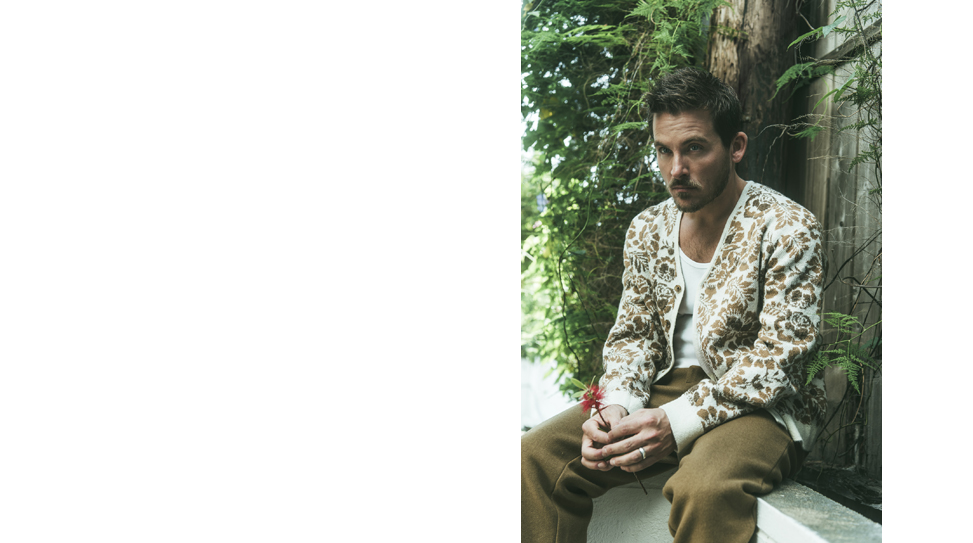
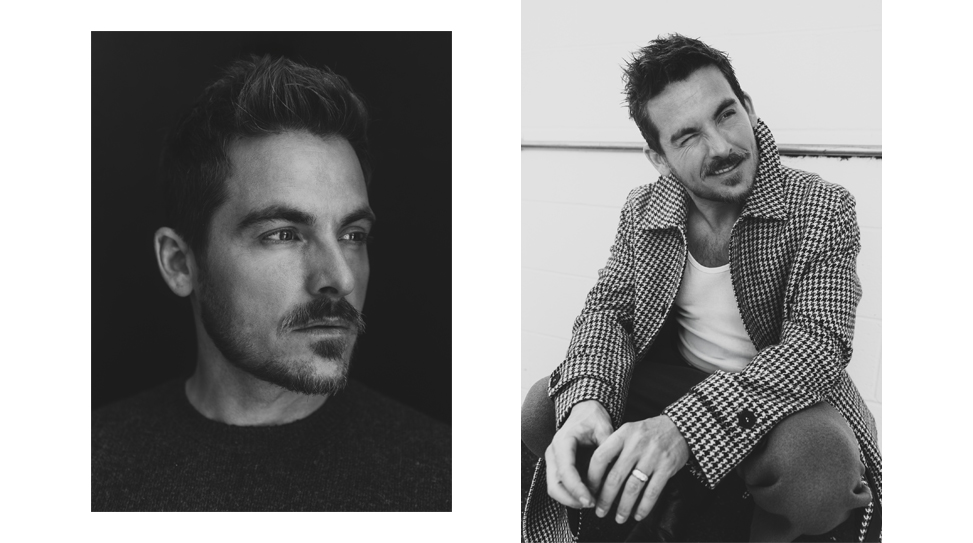
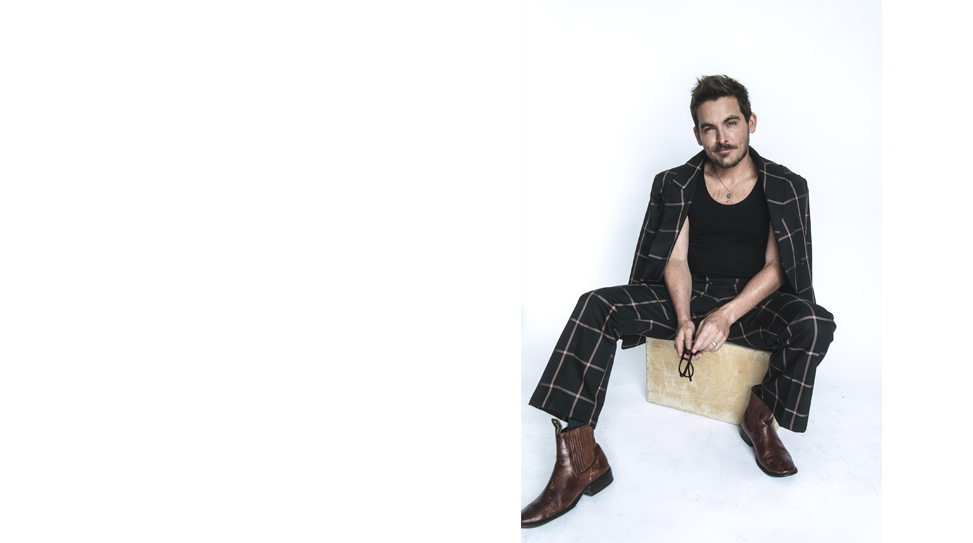
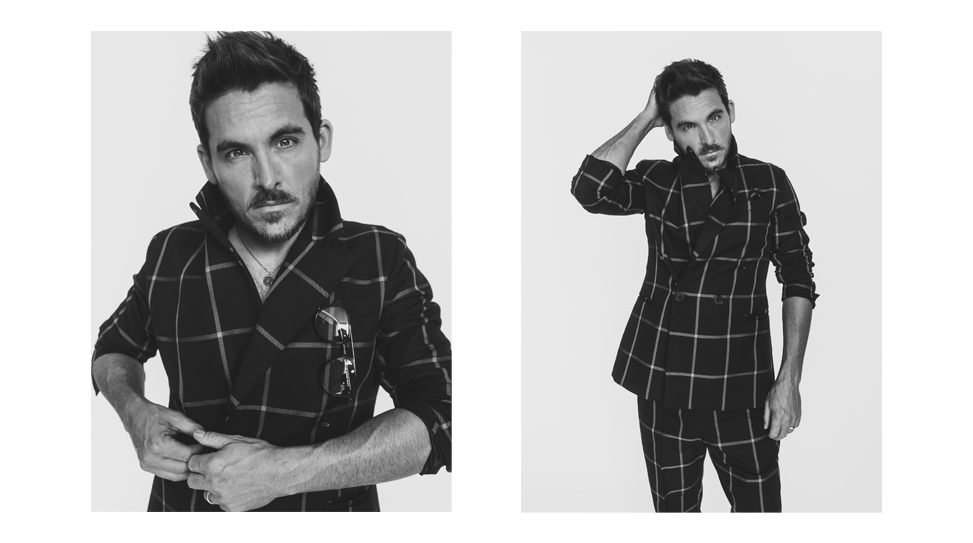
It was a weird time of perceived success. I needed to go broke and homeless and friendless. I wasn’t ready. I would’ve hurt a lot more people. It would’ve been a much bigger, much more public, collapse.
You Might Also Like
 Man of the Moment
 Let the Right One Win
Photography by Reto Sterchi
Styling by Alvin Stillwell at Celestine Agency
Grooming by Kimberly Bragalone at Redefine Representation using La Mer and Brightside
Produced by Jesse Simon
Location: MVMT Studios
Global Brand Ambassador: Kee Chang
Special Thanks to Ashley Roe
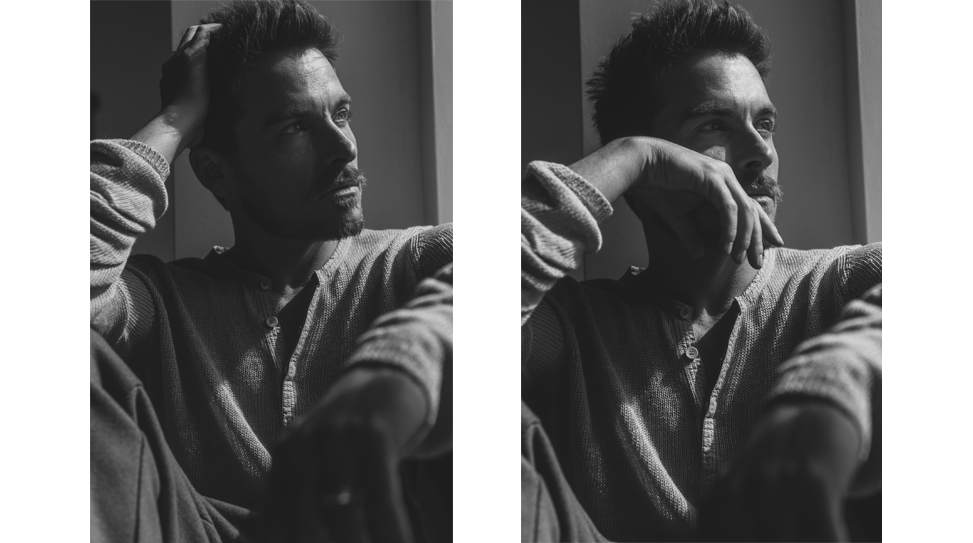
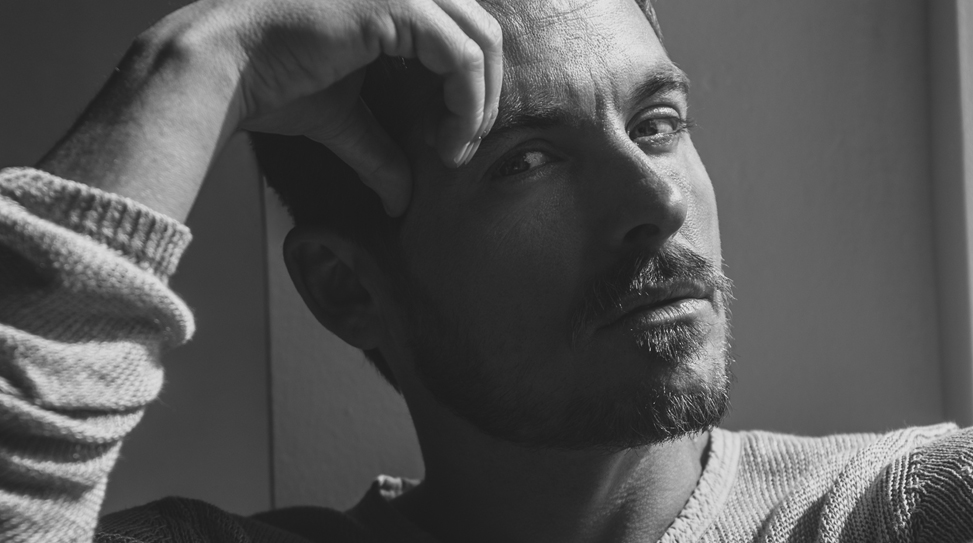
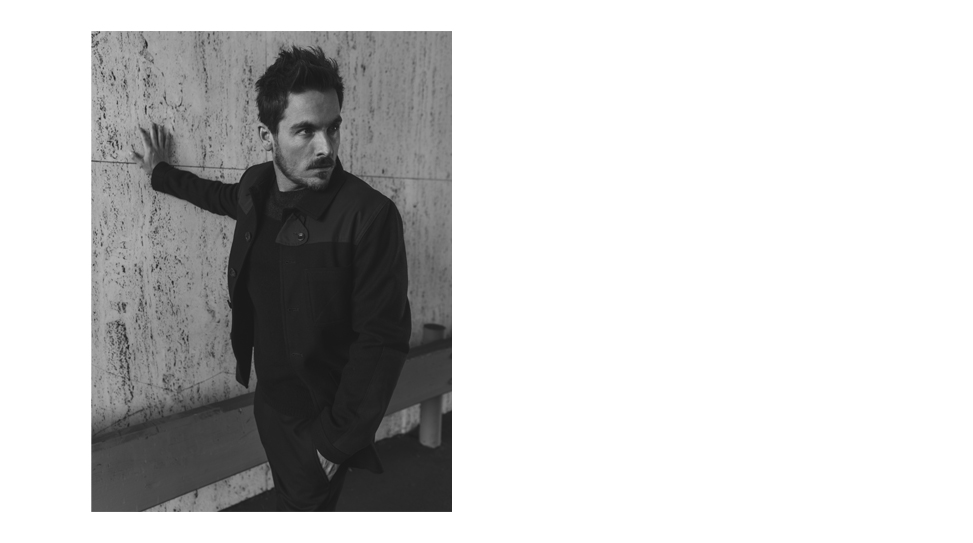
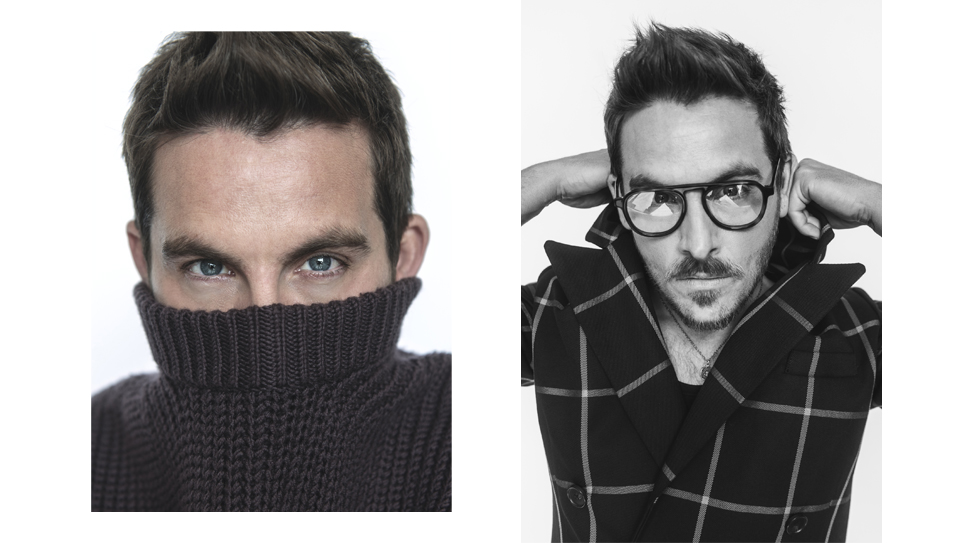
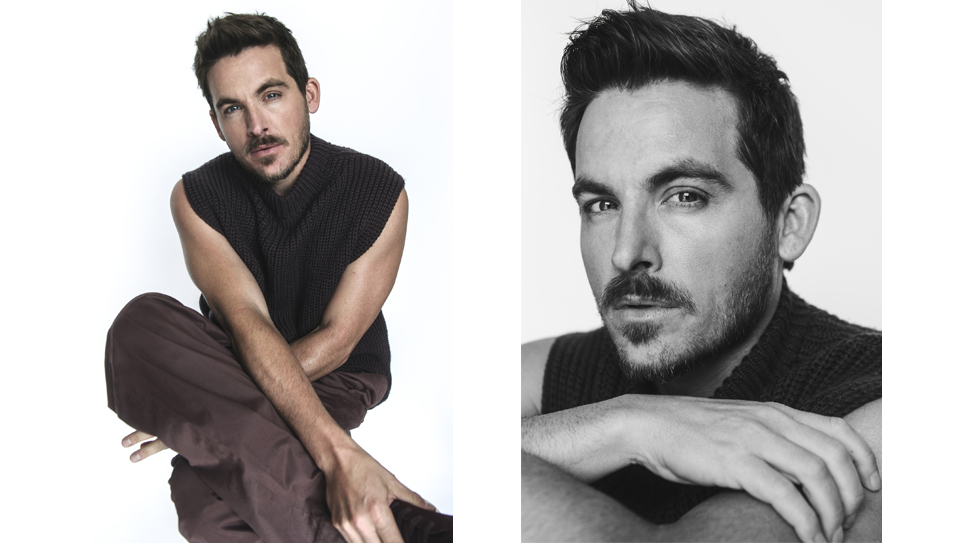
Kevin Zegers has spent much of his life in front of the cameras. A former child star, he got his start playing just that in the 1993 feel-good comedy Life with Mikey. He was Little Mikey, or Michael J. Fox’s former child self, who would later abandon acting and struggle to keep his own children’s talent agency afloat in New York City. Needless to say, Zegers stayed his course in acting.
Zegers found early fame with 1997’s Air Bud in which he played a lonely kid who befriends a basketball-playing golden retriever. Through the years, he would successfully transition out of his child-star era. Namely, at 21, he garnered notices for his performance as a troubled street hustler in the critical darling Transamerica, and even went on to pick up the Trophée Chopard at Cannes.
But Zegers didn’t exactly “come out the other side,” as he once put it, unscathed, which he will recollect in his own words. If his behind-the-scenes struggle ever flew under the radar, it simply wasn’t loud in the way we expect. And after all, he turned out okay. More than okay, in fact. Here he is, long sober, and happily married with children in tow. At 41, he is altogether centered.
With the arrival of Taylor Sheridan’s The Madison, you get the inescapable feeling that the Canadian actor is reintroducing himself. In his voice, gait, and the way he holds scenes, there is weight to his presence that feels wholly new. In a show about self-discovery, resilience, and the messy work that goes into rebuilding when everything you knew falls apart, you could say he is channeling his own life lessons. In The Madison, Michelle Pfeiffer leads the cast as Stacy Clyburn, the matriarch of a well-to-do family. When tragedy strikes, the Clyburns are tested in profound ways. Meanwhile, Stacy finds an unlikely confidant in a new acquaintance: Zegers’ Cade Harris.
Also on the docket for Zegers is Michael Young’s biopic Fleury. Based on the bestseller Playing with Fire: The Highest Highs and Lowest of Lows of Theo Fleury, he will star as the NHL legend.
The Madison premieres on Paramount+ on March 14.
Hi, Kevin. How are you doing, sir?
I’m good! I took my kids to school this morning, and I’ll be here when they return home.
That’s right. You have kids now. We spoke once before in the fall of 2013. Little did I know then, you’d just gotten married. I don’t think I’d asked you anything of real substance.
[laughs] Well, I did get married right around that time. It was pre-kids. I was maybe a year into my sobriety. I was feeling new and crispy. I was just figuring everything out. It was definitely a weird time for me. I was kinda all over the place. I hope I didn’t leave a bad impression…
Oh no, nothing like that. Honestly, I wasn’t privy to any of that stuff. We have these milestones in our lives, including professional ones. I think you started at six years old.
I did.
How often are you looking back going, “I’ve been doing this for a huge chunk of my life”?
I think I go through phases. I’m definitely more aware of it now. I mean, it was all I really did until I was 27, 28. Then life happened. I got married and had kids. I got my shit together. And probably for the first time in my life, I was like, “Do I actually like acting?” I guess I never really considered an alternative. A friend of mine who’s a professional athlete had the same thing happen to him in his late twenties. He played in the NHL from the age of six. People were like, “You’re amazing at hockey. That’s what you’re gonna do.” So that’s what you do. As for me, I went to set. I didn’t go to school. I had tutors. So I would be on set with my mom in Europe somewhere. It’s a cascade of that. Then I moved to Los Angeles at seventeen. I crashed. It’s just unsustainable if you’re not equipped to handle it, which I wasn’t. But I was able to give myself time to ask, “What do I like about this? Am I any good? What do I want to do if I continue?”
What did acting mean to you in the beginning?
The thing is, I don’t really have a memory of not doing it, which is odd.
Woah.
I’ve been to plenty of therapy to try and figure that out. [laughs] I grew up in a really small town. I don’t come from an artistic family. My dad worked in a mine. My mom was a hairdresser. We lived two hours away from a major city. I wasn’t that kid who was like, “I want to be an artist.” I wasn’t inspired to create something. I just wanted to play hockey. I was a little knucklehead.
So did someone scout you?
I think we were at a county fair when some guy was like, “Your kids are cute. You should do something with that.” I think my sisters and I ended up in a Sears catalogue. Then it was probably a photographer who suggested we go to Toronto. So my two sisters and I would go there to make some money. I remember being in the van a lot. We had a mini television with a built-in VCR. We took the seats out of the back of the van and set the TV up in there. I would lay there and watch Home Alone or whatever ‘cause it was a good two-hour drive each way. Making trips to the big city and coming back became this thing we did as a family. And as we kept doing that, it started to become the identity of our clan. We were different from the other folks in town. My parents were also super young. I think it’s something that’s appealing when you’re young.
And that led to movies. In Life with Mikey, you played Michael J. Fox’s former child actor.
Yeah, yeah, yeah.
That must’ve been interesting to do. It’s super meta.
You know, I remember meeting Michael. I remember he was really nice. I read one of his books a couple years ago. I hope I’m not misspeaking: Life with Mikey was when he first started showing symptoms of Parkinson’s. He was writing on a hotel stationary and noticed his hand was off. He was pretty young. He must’ve been in his late twenties, early thirties at the time.
As for myself on that film, I was like, “Don’t yell at me,” you know what I mean? [laughs] I was like, “I hope they liked how I said that line.” That’s something I still work against. I’m very programmed to be like, “I hope they like this.” It’s taken me a really long time to identify what I like and how I should be doing things. And I don’t ever remember thinking, “I wanna be good at acting.” So the thing I’ve come to realize about myself, which is built into me, is that I’m always doing what I think people expect from me. If I saw you nodding along in approval, I was on the right track. I continued to do that for like thirty movies, from age six to seventeen. And as I kept doing it, I got better and better at that. It is like a muscle. God, I gotta go to therapy again…
And that’s when you moved to Los Angeles?
Yeah, after high school. I graduated early.
You said, “I crashed.” What does that mean exactly?
That’s when I was like, “I have no idea what I’m doing. I’m completely without talent.” I mean, I was super fortunate to get Transamerica. It’s what I needed. I was this broken, empty vessel wanting love. I was so thirsty for love and attention that I would do anything to get it. People knew how to sort of use that to manipulate me, which was smart, I suppose. I didn’t get that job because I was talented or I was the best actor for the part. I was just down for the ride. They were like, “You don’t know what you’re doing, but we’re going to get you there with this woman [Felicity Huffman] who’s incredibly talented and this director [Duncan Tucker] who knows how to do this stuff.” Again, I got lucky. But that didn’t fix my lack of talent, you know what I mean?
Then the movie comes out and it’s awards season. I remember being at Cannes. I got this prize [Trophée Chopard] for whatever the hell it was. I vividly remember being at my most miserable. I was miserable ‘cause nobody had any idea that I can’t recreate what I did. I knew I was gonna get offered all this work now, and I don’t know what the fuck I’m doing. I have no idea what I’m doing outside of the confines of what that thing was on Transamerica. I was terrified. In retrospect, I really sabotaged my situation. ‘Cause I did get offered a lot of work. I said yes to the stuff that I thought was cool or whatever, but there were many other, often bigger, opportunities. But I would be out until four in the morning the night before a screen test or not learn the lines before a meeting. Subconsciously, I knew that I couldn’t deliver. I was like, “You can’t end up on a Chris Nolan set right now. The curtains will pull back. You don’t know what you’re doing. You’re gonna get fired, and that will be embarrassing.” I was racked by this for years.
I watched you on some talkshow. You discussed exactly this: pushing away the elevation of your career. You weren’t able to leverage this new opportunity with Transamerica. At the same time, if you look at your filmography, there’s no noticeable break in it. If you didn’t speak about this publicly, people outside of your circle wouldn’t know what went on.
I worked just enough that I didn’t disappear, but not enough that I was figuring anything out. I was deep in my not knowing what to do. I was deep in my addiction. It was a weird time of perceived success. Then, you know, I bottomed out. I’m super grateful for that now because I would probably be dead had I been smarter about my choices. Had I held on enough to take all the opportunities that I gave up, it would’ve changed my trajectory. More success. Ten, twenty million dollars in my mid-twenties. I don’t think I would’ve bottomed out the way I did. I needed to go broke and homeless and friendless. I’ve seen with other people how much money and success can soften the bounce at the bottom. I wasn’t ready. I would’ve hurt a lot more people. It would’ve been a much bigger, much more public, collapse. For me, it was much more private. I was able to do that with just my family and the people I know. Shame is so much a part of it. Being shamed in public—I don’t know if it’s something I would’ve been able to overcome.
I’m 41 now. I have a lot of things in my life that are much more important to me than being an actor. Even now with the show coming out, people ask, “What are you gonna do during hiatus?” I’m like, “I’m going to coach baseball. I’m going to host meetings at my house more often ‘cause I know I really need it when things are going well.” That’s enough for me. The thing about this show is that we shoot for five months, and for the other seven months, I can live my life. I can fill the bucket with things that actually give me sustenance. Then when I go back to set, I can give that away. I was also writing a book for awhile, but I put that down ‘cause, you know, too many people in it are still alive. [laughs] It’s just not the right time for that…
In the current iteration of my life, with The Madison especially, I try to only do things if I know I can be of service. That’s the baseline, which I think also feeds into the rest of my life. It keeps me out of my own way. If I were to come into this conversation like, “I really need Kee to like me,” or if I felt that I was manipulating you for an outcome—that’s never worked out for me in the past. It leaves me feeling empty. Even if I get the result I want, it feels like manipulation.
When I read [The Madison], I was like, “I could be of service to this. I can provide something to this.” I had a real strong idea about who this guy was and what he represented. So I went into the process of trying to get this job with that as the cornerstone. Through the last couple of years that we’ve been making it, I’ve come into an even greater clarity about that. I go to Montana. We shoot for five months. And I’m there to be of service, not just to my character and my work, but to others around me like Michelle [Pfeiffer]. I find it so much more rewarding that it’s not about me. It’s not about me doing a Taylor Sheridan show. It’s not about what I extract from this opportunity. That doesn’t work for me anymore. The points in my life when I had the most “stuff” were also the most miserable times in my life. That’s why I had to recalibrate. That is why, even doing press again, I’m trying to do it a little differently. I don’t want to get something for myself at the expense of what I’m trying to be of service to, if that makes any sense.
That certainly makes me feel good, Kevin.
[laughs] Good!
And it does make sense. You know, I’ve been referring to your character as “the healer.”
I love that! I’m not a religious guy, but it’s not surprising to me that I have a role where my job in the entire show is to be of service. Our director, Christina [Alexandra Voros], and I always talk about how my character is this steady horizon. He makes you feel like everything’s going to be okay. And that’s how I try to live my life. I’m not always successful at it, but that’s been my aspiration for the last ten years. It’s how I try to be as a father and as a husband. It’s how I try to be as a sponsor and with friends. It is to be steady. To me, that’s something worth aspiring to—not being some “cool actor guy,” which doesn’t appeal to me at all anymore.
Watching you on this show, you seem different. Something has fundamentally changed.
If you notice, my guy has a limp. He doesn’t ride in the rodeo anymore. To me, it’s weird that he doesn’t do that anymore ‘cause I know he’s not the kind of guy to just quit something. Whatever happened to him, it must’ve been serious enough to make him stop. So maybe his legs gotta be fucked up. Normally, my first instinct would be to check in with them about that ‘cause what if they think it’s too much? But on this, I showed up on the first day and just did it. I had conviction that I wasn’t making some frivolous choice. I knew that this feels right for the character.
But I still have to really work against the child actor in me that’s going, “I hope you don’t hate this thing I’m doing.” You have to remember: I didn’t come into acting from an artistic space. I came into this from a transactional place. So there is still that smothering voice: “Just do it well enough that they don’t hate it.” It’s something to push down. I have to tell myself, “It’s okay. You’ve thought this through. It’s valuable.” That’s ongoing with me. I still have to practice.
If you could call it by its name, is it people-pleasing? How do you frame that?
It’s pretty much that. In AA, you go through all of your character defects. There’s usually two or three consistently stupid things that I have to address in my life. There is the fear of people not liking me. There is the fear of economic insecurity, which is something everyone has, I suppose. For me, against all evidence to the contrary, I think everything’s gonna be taken away from me. There is also the fear that I’m not enough as I am. I need to crank it up a little so you won’t discard me. This is how I come into the world when I wake up in the morning. I have to do a lot to get to a baseline, telling myself, “You’re a good man. You have a good life. You’re good to other people. You don’t need to do anything extra for people to receive you.” It’s a daily practice. So yeah, I would call it people-pleasing. But it’s almost a little darker than that. It’s like, “Please don’t hate me.” Then it’s, “Don’t leave me.” I’ve gotten better about it. I’ve practiced enough to not have it drag on into the day. Then I also wonder, “When is this all gonna go away?”
Your book is wide open.
Of course.
I admire that. You’ve come all this way. These are your stories to share. Lessons. You know, it’s crazy thinking back to a time when I’d see you on the VHS box of Air Bud. That really puts your longevity into perspective for me. That wasn’t long after I moved to America.
I was twelve when I made Air Bud. I’ve grown to really appreciate it. ‘Cause some stuff you’re embarrassed by. That’s just how it is sometimes when you look back on your past work.
I wanna tell you about the sweetest little girl on The Madison: Alaina [Pollack]. She’s eleven and a half. She’d never really done anything in the business before this. I’ve sort of gravitated toward her and we’ve gotten super close. I see myself in her. I’ll ask her these questions that she was a little unnerved by in the beginning, like, “Do you ever feel trapped when you have to work?” I know how that feels. You can’t be like, “I don’t wanna do that.” There are 250 people up on a mountain in Montana, waiting. You gotta show up. There’s pressure. Expectations. She’s around a bunch of adults. She’s away from school and her friends. So we’ll go get our Dairy Queen.
Connecting with her has been such a good distraction for me as well. I’m able to give myself a little bit of grace. I’m so hard on myself, just innately. I have so much empathy for her, and I had so little empathy for myself when I was going through that. Talking to her validates how I’d felt. It’s been cathartic. Maybe I wish people had asked me these questions. Did I feel like it was a lot of pressure? So talking to her is something I look forward to. It’s how I don’t get wrapped up in my own shit. Whatever anxieties I might have about my own stuff sort of washes away.
You’re an invaluable resource to her. You’ve not only stood where she is—you know what lies ahead if she so chooses to continue. That transition is something I wonder about. When you find early fame especially, there are bound to be people who want to always remember you as you are. Meanwhile, you’re growing up and evolving as an artist. So you’re in this quagmire. You turn the page, but not everyone is necessarily turning the page with you.
Honestly, I think I had so many other bigger issues to deal with than that. [laughs]
That’s fair!
I wasn’t mindful in that way like I should change my narrative. It’s only in the last year or two that I started feeling ready to get back into it, asking myself, “What if I focused on my potential and see what comes of it?” The Madison is the first thing where I’ve felt that has really come to pass.
I love this show. I love the scripts. I love the actors involved. Hopefully, people will like the show. It is sort of what it is at this point. My duty as an artist has been fulfilled. That’s how I’m trying to approach this. Like we were talking about before, my need for affirmation is so profound that, if I get into the cycle of chasing good feedback, it’s unhealthy for me. So, having given all I have to give to the show’s two seasons, I can let go of the result. Taylor knows what he’s doing. Christina knows what she’s doing. Paramount knows what they’re doing. And that’s kind of it.
It did surprise me to learn that you guys already filmed two seasons. And I think the reason had something to do to with Kurt’s [Russell] availability. In any case, that’s rare.
Shooting both seasons has definitely been weird. Normally when you get around to shooting a second season, the show has been out there for a period of time. For us, the show doesn’t belong to anybody else yet. In my opinion, TV is a writer’s medium. So right now, it belongs to Taylor.
Do you think this project came at just the right moment for you?
I don’t think I could’ve done this five years ago. There’s something about Cade that feels settled. That’s how I feel in the best moments of my life. I wouldn’t have connected those dots in the past. As a father or with friends or sitting in my backyard with a guy that I’m sponsoring, I can be the best version of myself. Playing him, I try to lock into the best version of myself. I’m telling myself, “Relax. Be kind to yourself. You’re good enough.” Even between takes, with Christina or Kether [Abeles, 1st AD] and the crew, I try to stay in that. When I’m in Montana especially, Cade’s gentlemanly ways—the “sirs” and “mams”—are easy to lock into. It doesn’t feel foreign or manufactured. That’s who I aspire to be. It’s the version of myself that I like. So it feels less like a performance and more like a meditation. It’s who I would like to be always.
You’re absolutely critical to this show. It’s through your portrayal that we find the most affecting, teaching moments about kindness. Cade has an inherent goodness, which you telegraph so well. He’s the type of person that makes you wanna become a better person.
Oh, he’s so pure. He just wants to wrap his arms around people, and not in a smothering way. He’s so perceptive, even though the guy has probably never gone forty miles outside of town.
I’ve been told that you grew up on your uncle’s chicken and dairy farms in Canada, and that you learned to ride horses long before you stepped on any set. It’s your foundation.
Well, the Canadian farm boy is for sure in there somewhere. As you know now, I moved to LA at seventeen. I’m self-aware enough to realize that I’m pretty bougie. [laughs] But I am the only guy who rides on the show. Even when I’m not on set, I’m riding. I have my own horse, Stone, out there in Montana. Jason [Owen] and Cole [Palfreyman] are our wranglers. Those are my guys when we’re out there. They’re doing all the shit on the show. They’re real cowboys.
The real deal.
The real deal! After spending a week and a half with them, Montana starts to feel like home. Everything slows down. The cadence in your voices changes. You ride. Everyone sits around, smoking cigarettes and shooting the shit. You herd cattle. After a couple weeks of that, it’s sort of in you. On the days I’m not working, I’ll ride my horse to set around lunchtime and rip into craft service. And if I am doing a scene that day, I’ll ride up the valley or whatever to set.
I wrote Jason a note after we finished this year when I realized just how much of him is in Cade. I mean, he lives in West Texas with horses. It’s been a huge gift to pick his brain and talk about his life. He unlocked parts of Cade. The way he moves and behaves is in Cade. Cade’s subtle kindness and decency is what you find in Jason. It’s the way Jason will walk by you and brush off your shoe. It’s things like that. Jason has been a huge asset to bounce things off of.
He’s your inadvertent technical advisor.
A hundred percent! Last summer, when they were prepping for Taylor’s other show, I went to Texas and rode for a week to stay in it ‘cause I knew we’d be going back to Montana.
You have Fleury on the way, too. That project seems tailor-made for you in some ways.
I am a hockey player.
I know you played AAA hockey. It’s ticking the boxes.
It is. I’d actually met Theo [Fleury] when I was on location in Belfast shooting a movie. I was still drinking then so I must’ve been around 22. He’d gotten washed outta the NHL. Now he was playing for the Belfast Giants. I obviously knew who he was. He’s a big deal in Canada. I was heartbroken to see this shell of a guy who was once a hero of mine. He was making a couple grand a week to play for this team in Northern Ireland. I just remember that being so depressing.
Then I read his book, which I thought was great. And after I read his book, I went back to my own book that I’ve been working on for years. Again, I was faced with this reality: “I can’t write this book. I’d have to change all the names. How many kids were famous at eleven? People will figure out everyone’s identity. It’s too personal.” Then I thought, “Maybe Fleury is my way into discussing the things I’ve had to deal with”—and I’m not just talking about the addiction stuff.
For Theo, the abuse he endured meant that he would become this animal when he played hockey. And he’s five foot six. He’s a little guy. He was obviously super talented to begin with, but his anger and vitriol was also part of the driving force shaping him into this incredible player. His whole life, that was his paradox: the thing fueling him was born out of the horrible abuse he suffered as a kid. I think it’s compelling that you’re made to wrestle with abuse in that way. ‘Cause it’s not something to disown. It may have ruined his life, but it also created his livelihood. I think he’s racked with guilt about that. I think he feels shame about it. I think the abuse is also humiliating, especially for a man in this masculine sport where you’re puffing out your chest.
For me, it’s an opportunity to explore stuff artistically that I’ve spoken about in meetings and with a therapist. I understand the confusion of it all. It’s actually not that black and white.
Are you in communication with Theo?
Theo and I have talked a bunch since I attached myself to this project. I think another actor was gonna do it at some point. I met with the director, Michael [Young], and we’re still working through the script. We’re trying to figure out the best way to move the narrative forward.
Revisiting addiction and abuse is confronting. Does this project scare you?
It terrifies me. That’s why I’ve been dragging my feet. I know we have to make it at some point, and I really want to. But I need a block of time to allow myself to go there. Frankly, I have to set my life up in such a way to support it. For obvious reasons, it won’t be a particularly easy shoot.
I can imagine you feel a great responsibility as well.
It’s important to me that we do it properly, obviously for Theo, but all survivors of abuse.
And Little Kevin.
You know, being a child actor was really painful for me. I don’t really look back on it with fondness. There is tremendous amount of pain associated with that. A lot of bad stuff happened to me when I was younger. However, I also just got back from Montana where I got to ride horses and be a cowboy and work with Michelle Pfeiffer. That farm kid from Canada is now working on a big Taylor Sheridan set. So those two things co-exist. That is my reality.
All those years ago, I’d asked you how you make choices. It was a practical answer: “I do the best thing in front of me.” As you’ve established, your priorities have also changed.
Just recently, I got offered to do a movie and I wasn’t inspired to go back to work. Plus, I’d given a lot to The Madison. So it was like, “No, I’m good. I don’t have any more to give right now.” Arriving at this place has been freeing. I no longer have the aspirations I used to have about money and fame or whatever. This is the luxury of having had a couple of goes on the rollercoaster. I think what’s happened over the last 34, 35 years is that being on sets without having much to do has become the least interesting thing in the world to me. It is nonsense. I need to feel that I’m useful. It has to be worth it to take time away from my kids and my wife and the life I enjoy. That’s sort of the determining factor these days. So it is different now.
That also gives you more time to fill the pages of your book!
[laughs] You’ll read it at some point I’m sure. I’ll have a weak moment.
What might you call it?
It’s changed a bunch…
You don’t have to indulge me. I know it’s a work in progress.
It is very much a work in progress. And it’s actually quite funny. It doesn’t take itself too seriously. But it is about my life. There’s a lot of people in there that other people will recognize. I just don’t need that upheaval right now. [laughs] So, when the time comes, I’ll finish it.

No Comments