
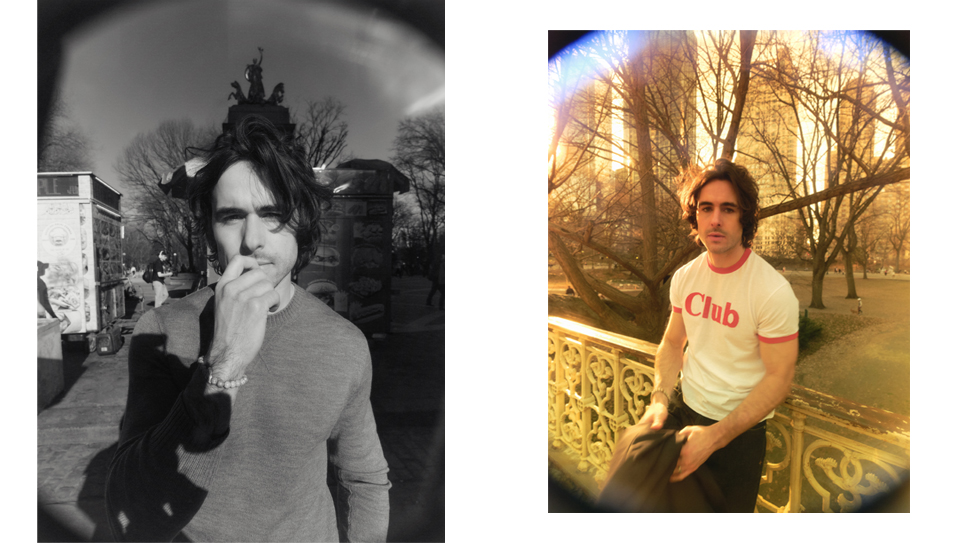
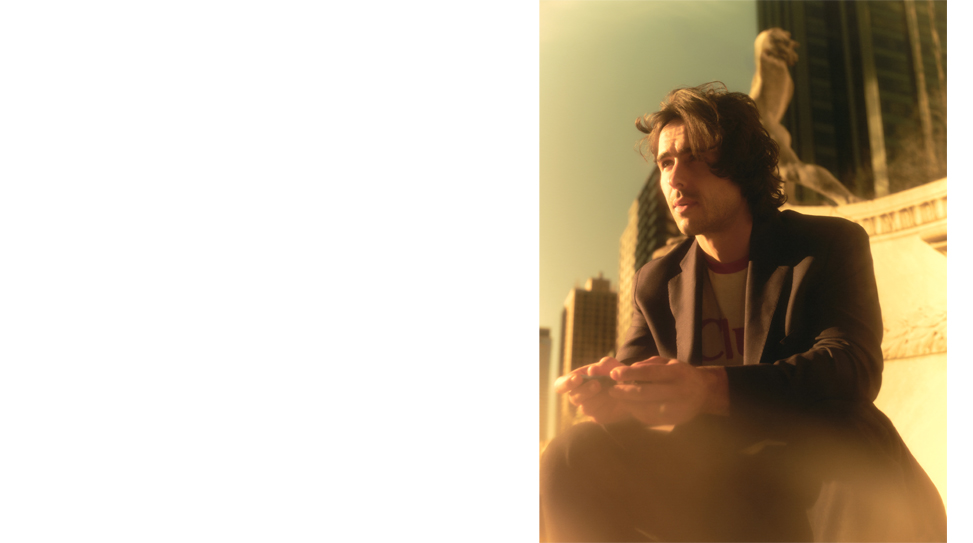
There are pillars in my life that are very useful to me as an actor. If I know that he has kids, that’s very immediate. It’s something I can’t ignore. Nothing changes you like becoming a parent.
You Might Also Like
 Fatal Attraction
 I’m Still Here
Photography by Matthew Cylinder
Styling by Emily Bogner at Exclusive Artists
Grooming by Rheanne White at Tracey Mattingly Agency using R+Co
Global Brand Ambassador: Kee Chang
Special Thanks to Bryna Rifkin & Danielle Day
Don’t call it a spin-off. Don’t call it a Western. What it is, however, is a new addition to the ever-expanding Taylor Sheridan Universe. The prolific writer-producer never misses a day of work in his life, and that means there are more of his offerings than we know to shake a stick at. The series in question is, of course, The Madison. A standalone story unrelated to Yellowstone and its existing stable of characters, the prestige drama has everything to do with grieving and learning to rebuild a life around it. Directed by Christina Alexandra Voros, a trusted partner in Sheridan’s unstoppable TVscape, The Madison has been called the scribe’s most intimate and emotionally grounded work.
As we discover in the premiere episode of The Madison, the lives of Stacy Clyburn (Michelle Pfeiffer) and her children are forever changed following the sudden passing of Kurt Russell’s husband and father Preston Clyburn. The series follows the remaining Clyburn women, from a moving and shaking New York City to the windswept plains of Montana, as they prepare to lay Preston to rest and, at long last, commune with the place he loved despite their unbothered absence.
And for everything that distinguishes The Madison from Sheridan’s other “macho” shows such as Marshals, for instance, there are hallmarks to remind us that this is still very much his terrain. Look no further than Ben Schnetzer’s Van Davis, a salt-of-the-earth sheriff’s deputy residing in the Madison River Valley where the Clyburn women now find themselves. What Van embodies is a certain portrait of the masculine ideal that is inseparable from the Sheridan canon. Schnetzer, who has come into fatherhood in recent years and takes on a markedly mature role in The Madison, is a clear standout. He is steady. And he has never looked this good. He is our man of the moment.
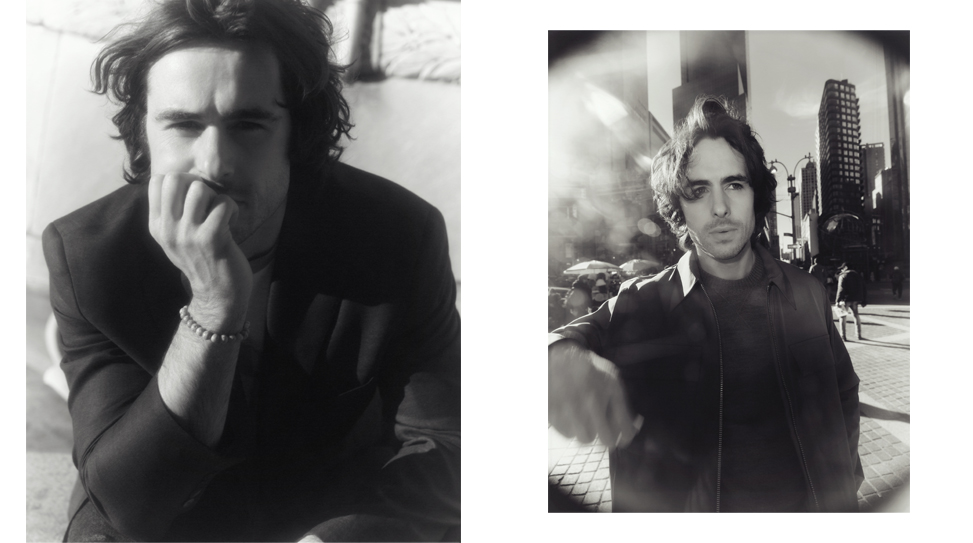
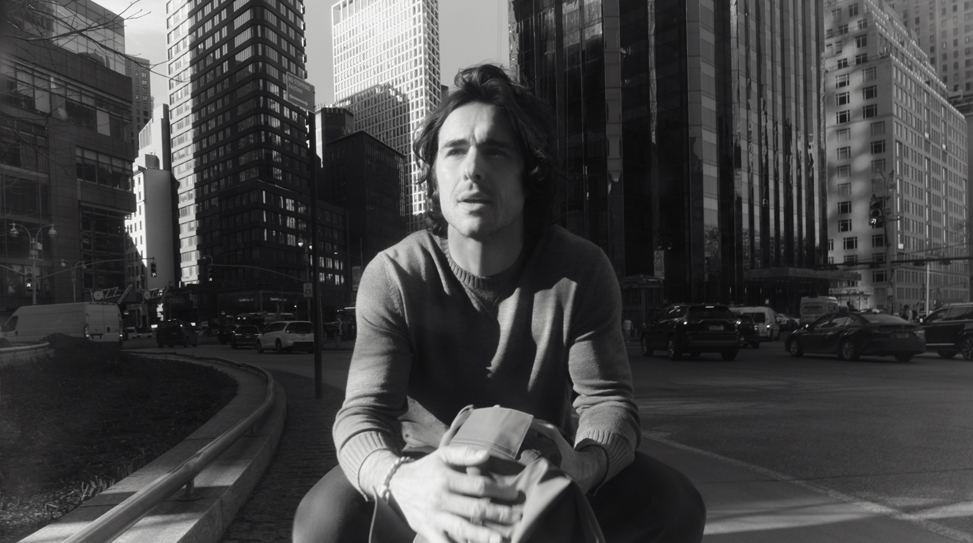
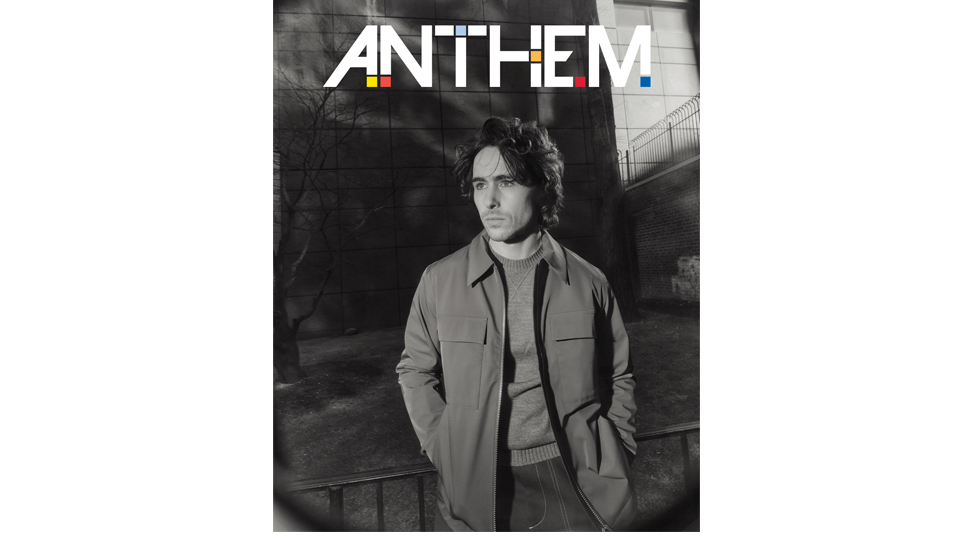
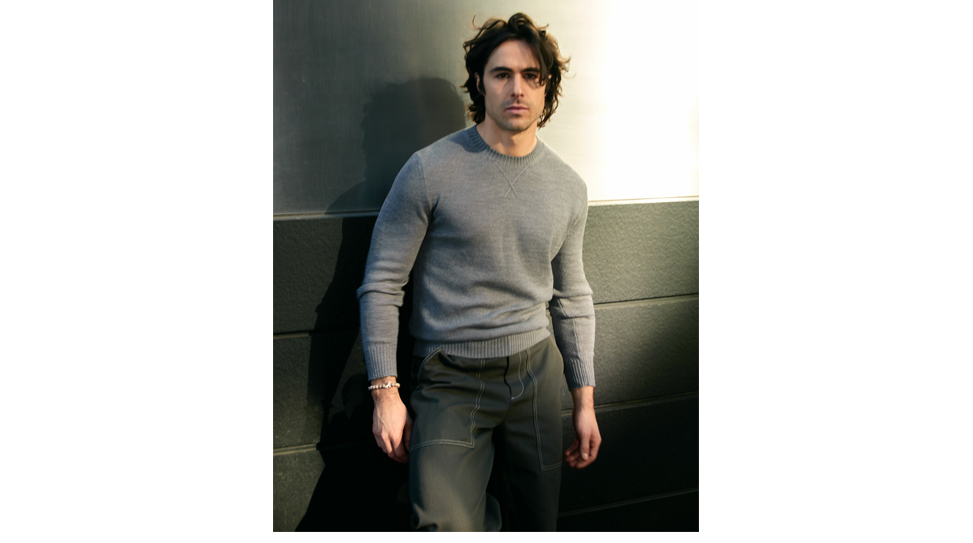
Anthem caught up with Schnetzer in New York City in the days leading up to the show’s premiere.
The Madison concludes its six-episode first season on Paramount+ on March 21.
Hi, Ben. How are you doing, sir?
I’m good, I’m good! It’s good to see you!
I was just thinking that it’s kind of wild we’ve only spoken once before. That was all the way back in 2019 when The Death and Life of John F. Donovan was making the rounds.
That was many, many moons ago…
It also feels like I’m meeting you anew. I know you’ve become a father in recent years.
I’ve been reborn as a father. It’s definitely a different chapter in my life.
You have two kids?
I do. A little girl and a little boy.
Are they old enough to know what daddy does for a living?
I mean, my daughter is aware just enough to know that I play make-believe. My wife [Kate Hewitt] is a director, so she knows that we both make movies and TV shows. But I think it’s all kind of ethereal. Her understanding of it isn’t concrete at this stage. On this last one [The Madison], she was excited for a while. She was telling everybody that her daddy was a cowboy. But when you’re in Montana, there are actual cowboys. So I’m like, “Don’t put that weight on me!”
Is she perhaps showing early signs of following in your footsteps?
I think my daughter definitely has a flair for it. She loves to entertain.
I’m guessing you’re receptive to that. I mean, you grew up watching your actor parents.
Yeah, my parents both come from the theater. It never felt foreign to me. It always felt natural.
I think you were showing signs of showmanship as early as four years old. You’re known to have performed Elvis songs for the family, all decked out with an aluminum-foil mic.
I was obsessed with Elvis. That was my go-to. I did Vegas Elvis for my grandparents.
Do you think that was revealing about you?
I don’t know… I feel like playing make-believe and wanting to entertain is a natural, innate thing in a lot of kids, even for the ones that might not end up going into the entertainment business. But for me, I can’t remember a time when I didn’t want to tell stories. I always wanted to play dress-up and play make-believe. With friends, with my brother, I’d get lost in my imagination.
I think your brother was the costume designer to your Vegas Elvis.
Where did I even talk about this before? [laughs] He’d get glue, glitter, sequins, and strings. He’d get one of my grandpa’s or dad’s old white dress shirts and make my Elvis jumpsuit out of that. And then I’d get suited up and go to work. It was showtime! I gotta find some photos of this…
Please do! I would really, really enjoy that. Also, I get curious about siblings because you grow up under the same household with similar influences. Is he in entertainment?
He isn’t, so he’s the black sheep in the family. We’re very, very close, and we were very close growing up as well. He’s older than me, so anything he did was the coolest thing in the world to me. I was always following him around, tugging on his shirt sleeves. My parents didn’t really let us watch TV, much to our chagrin, so we’d play together all the time. We were always playing a lot of imaginative games. It was a lot of WWF, or WWE now, just roughhousing. We were very physical kids. We were always getting hurt. And he was the older brother so he usually got the brunt of it, bless him. It’s a very special relationship. Anybody who has siblings knows how singular that connection is. I’m very grateful to him.
As a dad, is there a new appreciation for your parents shielding you from too much TV?
I’m profoundly grateful. I’m like, “Oh man, I wish I had been so much nicer to my parents as a kid.” And it’s different now, too. I mean, I’m dreading the day when my kids start becoming aware of social media and wanting to engage with that. My wife and I try super hard to keep no screens in our house as much as we can. Our daughter watches Bluey and stuff like that on the weekends, but we’re very cautious and a little paranoid about that. Each generation has its own cross to bear, I guess. That’s what TV was for my parents’ generation. And I don’t think TV is as insidious and potentially harmful as these miniature devices that have access to everything all the time. There was definitely a lot of real-life troublemaking fun that my brother and I got into that we wouldn’t have had with too much TV around. But we did have a Nintendo 64. We were allowed to play Mario Kart and Golden Eye on the weekends.
Mario Kart and Golden Eye—those are the classics.
Dude. Mario Kart, Golden Eye, and Tony Hawk’s Pro Skater. The Saturday mornings rotation!
There’s parallel in this: how you were raised and how you raise your kids. If your children ever decided to take up acting, we would have the Schnetzer acting dynasty.
We could be a dynasty! We would give the Barrymores a run for their money! [laughs] Really, I want my kids to do whatever gets them going. Whatever it is, I just hope they find something they’re passionate about and want to give themselves to. That’s all you can really ask for. That sounds so cliché, but when you become a parent, every cliché resonates all of a sudden.
Time is on their side. I think you were nineteen when you did Happy Town.
I was.
Do you consider that your starting line?
I would, yeah. I mean, I was auditioning for stuff in high school a little bit. But I was still very green and raw. I was so nervous going to auditions. I kind of hated that process. You know, Rhonda Price is still my agent today. She’s also a mentor and a friend. She started representing me when I was 16. She was a very firm hand when I needed one, but she was also nurturing, guiding me. She would send me on these auditions and I would be like, “I don’t know if I wanna do it…” I remember she would talk to me about that. She was like, “If you just wanna be a kid, if you wanna go to school, that’s totally cool.” Then I was like, “No, let’s take a swing at this. Let’s see what happens.” Like anything else, you gotta get the reps in. You’re practicing. You practice and practice and practice. You continue to show up. You learn how to work and how to prepare.
Perspective is a funny thing. I remember getting booked on my first movie. I’d been saying to myself, “If I don’t book anything before I graduate high school, I’m probably gonna cash in my chips. I’ll go do something else.” It was an indie movie. It was the last audition I went on in high school that I ended up booking. I was like, “Mom, this is it. I’ll quit my job. It’s the big time now.” [laughs] My mom was like, “When does it start filming?” I was like, “September.” She was like, “You’re not quitting your job. Go to work tomorrow.” In the end, they couldn’t get the financing together so that movie never got made. Still, it gave me the push to be like, “Maybe stick with it a bit longer and see where this goes.”
With Happy Town, it was the first time where I was like, “There is a whole different side to acting beyond auditioning.” Now you’ve moved on to this other chapter where you’re working, exploring. And I wanted to give it everything I had. It was also at a time when all of these ultra-talented young British actors were breaking in the U.S. I remember Ben Whishaw in particular. In 2009, Bright Star, the Jane Campion film, was playing at the Toronto Film Festival. We filmed Happy Town in Toronto, and I went to see that film. I remember being really inspired and being in awe of this dude’s performance. Tom Hardy, Michael Fassbender, James McAvoy—the list goes on and on of these young British and Irish actors who were breaking at the time. And there was a common thread: when I was reading up on these dudes, they had all went to theater school in England. They’re all classically trained. So I did a Shakespeare workshop, and I’d never done Shakespeare before. It was with this brilliant teacher named Patsy Rodenburg in New York City. That was a real turning point for me. She was also the Head of Voice and Speech at Guildhall, which is where I went in London. I was like, “I really want to go study with this woman and learn from her.”
You also scored The Book Thief while you were still a student at Guildhall, didn’t you?
I did.
So the dominoes were falling at just the right times for you.
That’s why I only really went to drama school for two years. At most theater conservatories, your final year is your showcase year. Basically, you’re doing all of your meat-and-potatoes training in your first two years, and then you’re doing productions in your final year. Those productions are open to the public. Industry people come. Hopefully, you get some attention and that’s your entry into the profession. So I started auditioning in earnest in my final year at Guildhall. I got lucky and booked something. That was at the beginning of the year, so I actually ended up doing a couple months of my final year. After that, I left to go do The Book Thief.
So there really wasn’t anything for you to go back to at Guildhall. Your studies were done.
I mean, I did wrap in time to go back, but it was weird… This job is really feast or famine, right? While I was filming The Book Thief, I also booked another movie called The Riot Club.
I remember that movie.
Then a few weeks after I wrapped on The Riot Club, I went to go shoot Pride. So I did three movies that first year out of school. It was very intense, going from not having worked to all of a sudden doing three movies back to back. It was also a physically taxing year ‘cause I lost a lot of weight to do The Book Thief. That character is very ill. I underestimated how incredibly challenging that experience would be. And then you go from that to being told, “Hey, you have to put some weight back on to do these other movies.” Physically, I just wasn’t very well. But when these opportunities come up, you’re going, “Oh my god, pinch me right now.” When those doors open in this business, you gotta walk through it.
No question. The Book Thief certainly feels like you started at the deep end, too, if you’re gonna be researching the holocaust, all the while starving yourself to look the part. Were you really hard on yourself? Did you feel a lot of pressure inhabiting that role?
I felt a lot of pressure and a huge responsibility. They really put us through our paces in that audition process. I knew it was a great opportunity and a big opportunity. The script was so beautiful. And when you’re telling a story of such gravity, you owe it to the subject matter to do it justice. It was interesting to me, too. I was very committed. I wanted to give it my everything. I still take my work very seriously. Back then, I think I probably took myself a little too seriously.
And now, we find you on The Madison. Congratulations on the show.
Thank you so much.
Full disclosure from me: I didn’t know you were on this show when Paramount sent me the first batch of episodes. So when I saw your name in the opening titles, I got super excited.
Oh, thanks man. I’m incredibly proud to be part of it. It’s a beautiful, intimate, wistful, romantic story. I think it’s a very meaningful piece. It’s been a wild experience with an amazing team. Working with Taylor Sheridan and his writing is a gift. In this industry, every now and then, a gift like this comes along. It’s about knowing when to recognize them.
We had the New York premiere last night. And doing the press junket yesterday, I got to discover how I really feel about it by talking about it. It’s a particular experience making any piece of work. This job has been very singular in the way we shot it—we did two seasons kind of back to back. We just wrapped season two not long ago. So it’s interesting to be going to the premiere of season one and promote the show so shortly after having been on set. Usually, you wrap a job and then it’s like a year and a half later that you’re at the premiere going, “What’s everybody’s name again?” [laughs] With this one, it feels very immediate. It still feels very raw and fresh.
I’m coming clean about this, too: I was snooping on Kate’s Instagram. I saw that you’d brought your family out to Bozeman, presumably while you were filming The Madison. That’s a fairly recent development for you. Having family on shoots wasn’t always the case.
Totally. Certainly with season two. Season one was crazy because Kate was heavily pregnant with our son when I was filming. That whole season, I was very aware that I was far from my family. Every time my phone rang, I was like, “Oh my gosh, she’s in labor!” It was hard to sleep every night. Every time we’d get a new schedule, I’d be on my toes. I remember my agent speaking to Taylor about this early on. Taylor was like, “I’ll take care of him. Don’t worry.” Also, a big shoutout to our 1st AD Kether [Abeles]. For anyone reading this who’s not familiar with what a 1st AD does, they are the control room on a shoot. She was very supportive, and made sure that I was wrapped in time to get home for the big day. And then for season two, I brought the family. I’m so bewitched by Montana that it was really meaningful for me to bring my family out there.
It looks absolutely stunning. A haven for people who love the outdoors.
Completely. And the more I age, the more I’m like, “I just don’t wanna be in a city.”
It’s the perfect place to have ended up. The beautiful location certainly, which you can enjoy with the family, but you also feel really grown-up in this role. That has to do with the part you’re playing of course, but it’s also how you stand in his shoes. Does it feel different?
It does. It’s interesting in this line of work, right? As you grow up and mature as a person, that’s obviously gonna inform you and bleed into your work. Nothing changes someone like becoming a parent. That has been seismic for me. I’d spent a lot of time auditioning for and playing college students. It’s like, “I’m 29 and I’m still playing a college student? Okay…” [laughs]
And it’s obviously been a very strange time in the business for everybody. During Covid, I filmed a show that meant a great deal to me. I loved Y: The Last Man. Because the world was in a global health crisis, it was a very protracted experience. We became a real family on that show. So we were all very sad that it didn’t find traction and have a life beyond the first season. After that show came out, I wanted to take my time and be discerning about what was next on the docket. That experience set the bar very high for me. Of course, it’s also a job so as I was stepping back for a little bit, it’s like, “Alright, it’s time to put your boots on and go back to work now. Provide for the family and go do the thing.” And then the strike happened. So that’s another year where you’re going, “We’re in a very strange time right now.” As I’m coming out of that, my agent calls me: “Taylor Sheridan has this thing that you might be right for.”
Yeah, I was wondering how this show came into your orbit.
It’s funny because I screen-tested for another one of Taylor’s shows in 2022. I’d flown out to Wyoming to do that. I worked with him in the room. Then I left that audition and my agent called me twenty minutes later: “So, it’s not going your way. But Taylor wants to reach out to you.” Another twenty minutes later, I get an email from Taylor: “Hey, man. You’re just not right for this part, but I really liked working with you. I’m gonna find something that you are right for.” I could just tell from the email that he was being honest and forthright. When you jump through hoops in this job, a little gesture like that goes a long way. Taylor used to be an actor. He knows. So even if nothing had come out of it, it already made that whole experience feel like it wasn’t for naught. A year and a half later, I was on vacation with my family when my agent called: “Taylor has this thing he thinks you’re right for.”
We really never know which opportunity will lead into something else. Also, I think being in this industry especially cultivates a high-functioning bullshit meter. There’s a lot of fakeness all the time, so when someone is super genuine, you recognize that right away.
Exactly, exactly.
It’s been a great gig. It’s been really meaningful. I’m excited for audiences to see it. I think it’s a show that asks audiences to show up for it. It’s like, “Slow down. Put your phone down. Sit with this family for an hour.” When I watched it for the first time, I found something comforting in it.
This show interrogates grief and rebuilding life in such an all-consuming way that it almost feels conceptual to me. So, as you’re saying, it is remarkable how comforting it is.
I hope that’s the journey people take with it. There is something undeniably healing about it.
Just so you know, I’m not passively agreeing with you. I lost my dad last fall so that’s fairly recent. The way I’m drawn to this show feels pure, like it’s giving something back to me.
I’m sorry to hear about your dad, Kee.
I appreciate that, Ben. And you’re certainly part of it all. Van is full of wisdom. Van is a calm presence. Van is a balm in crisis. Van is perhaps the dad you are in real life.
I mean…
I’m saying it. Now you don’t have to.
[laughs] There are definitely times in my life where I’m like, “How would Van handle this situation?” He’s far more capable than I am. At the junket yesterday, someone was like, “How much personal experience did you have to draw on to play this part?” I was like, “Dude, I could not have less experience to draw from!”
As an actor, you have to fall in love with any character you play. I think it was Penélope Cruz who said in an interview: “You have to be their defense attorney.” I did a film that came out last year called Swiped, which is about the founding of Tinder. The character I played, on paper, is antagonistic. So it was an exciting challenge for me to look at this guy as a tragic hero. I can’t look at him as a bad guy. That’s not doing my job. That’s not doing it justice. How do I find someone who is three-dimensional? How do I justify his actions? There’s a reason behind everything we do. You have to find what that reason is, and it doesn’t matter how much you might disagree with it in real life. With someone like Van, when you get an opportunity to play a character that’s very easy to fall in love with—not just with an immediate sense of empathy, but also admiration—you wanna meet them at eye level. It’s a treat. It’s fabulous.
Really, the prep and research that went into this part was incredibly enriching. I spent a lot of time on the Gallatin River, the Madison River, the Yellowstone River, fly fishing and rowing a drift boat. There’s a reason why people travel from all over the world to get lost in nature there. There are also a few actors that I consistently come back to as touchstones when I’m working. For this job in particular, it was Robert Duvall. There’s no other actor whose work I admire more. I watched Tender Mercies every few weeks while we were filming the first season. These are obviously hugely different projects, but there was something about the spirit of that character in his performance. And then there’s Robert Redford. That parallel is clear: A River Runs Through It.
You know, I’ve been thinking about you on these terms: growing up, and also glowing up.
[laughs]
I was literally talking to your team about this: you look so good on this show. And you think, “Well, of course his team is gonna say that about their client.” But it’s true, because I have eyes? Frankly, we’re reminded of Van’s attractiveness quite a lot on this show.
As an actor looking at a script, I’m just looking for facts. I write down those facts. I write down questions I have. I write down anything my character says about himself and others, and anything other people say about my character. You’re doing the detective work.
And it’s an important detail, isn’t it? Abby isn’t looking for someone new, and Montana is a short stint for her. So Van has to draw her attention and out of her shell rather quickly.
Yeah, yeah, yeah.
It’s also in the dialogue that Taylor wrote.
Yeah, there are a few lines in it where they talk about what this guy looks like. When you read something like that, you know, you hope you don’t fumble the ball… I’m blushing! [laughs] For me, you just take that in on the page. You hope that you get good lighting and good hair and good makeup and forgiving lenses on the camera. You let the rest take care of itself.
I have intel that you’re living in London these days.
I do. My wife’s English.
And you were obviously born and raised in New York City. I found it amusing that you are the city boy Van lightly pokes fun at. Not specifically the Peloton kind of guy. A city guy.
Well, there are certainly pillars in my life that are very useful to me as an actor. My job is to see the world through the character’s eyes. If I know that he has kids, for example, that’s very immediate.
That’s your shorthand.
Right. Being the parent that I am, it’s something I can’t ignore.
And for someone who appears rather reserved in his natural state, Van sure opens up a lot.
I think Van is just trying to navigate the tragedy he’s experienced in recent years. His tragedy might not be as fresh as Abby’s, but he’s also a young dude. And I think he’s ready to open up. He talks about his wife’s spark, and he sees a flame in Abby. He’s clearly drawn to wildness.
Who is Van to you at his core? What is his core that remains unchanged by tragedy?
He comes from a place in the world where being someone’s neighbor really means something. There’s a responsibility that comes with being a member of the community. I admire how dutiful and obliging he is. As we established, I’m a city boy, born and raised, but my grandfather on my mom’s side was a farmer in southern Illinois. We would go to his farm every summer, and he had these very neighbors out there. So when I read the script, I was like, “Oh, this is my grandparents’ neighbors.” If my grandfather needed to be driven to an appointment, it was your duty as a neighbor, a member of the community, to give a helping hand. I think that gives him a real clarity. Culturally, it’s also very different from a lot of what we’re used to seeing on TV. This isn’t a cynical, ironic, glib show. It’s a show that’s very unapologetic in its earnestness.
Right before we started filming, I asked Christina [Alexandra Voros], our director, if there was anything she thought might be helpful to me in my research. She suggested a book called The Solace of Open Spaces by Gretel Ehrlich. So I read it. I also listened to the audiobook on the beautiful drives to and from set. The author talks about living on a ranch in Wyoming. And there’s this line: “Honesty is stronger medicine than sympathy.” That was an anchor for me in this part. When you’re living amongst the elements in the wild, you need a fierce community. Nature is indifferent. Life can become dangerous. So you need forthrightness and honesty over false comfort. I really ruminated on what that line meant to me.
How much of The Madison have you watched?
I’ve only watched the first two episodes. I just need a little time before I can really sit down with it. Every actor gets neurotic and self-conscious watching themselves.
I’m curious about your interpretation of the scene where Stacy breaks down in the river. Van is telling her what to expect next in her grieving. He tells her that his kids were the reason for him to continue living. I can’t help but wonder if that might be the sole reason he chose to stick around. I mean, is there a version of this where Van didn’t make it this far in life?
Man, it’s really interesting to hear your insights and point of view… I mean, Van’s been through a lot to process losing his wife. I’m sure there were moments where he fell apart. He most certainly wants to be there for his kids. And I think when you have a sense of duty and an obliging heartbeat as much as Van does, you hold it together and continue to stick around for your community.
That scene was really meaningful to shoot. It’s also funny because, I mean, the words are very intimate and delicate, right? So that’s how I rehearsed it in my head. Then you show up to set and it’s like, “Wait a second. She’s thirty feet away from me in the middle of rushing water. I have to shout my dialogue?” That’s just not how I had pictured it. But when you have a performer as gracious and generous as Michelle [Pfeiffer] to work with, you go, “Dude, this scene isn’t about you.” It was probably October when we filmed that scene so it was getting cold in Montana. I was thinking we’ll probably do her coverage and they’ll bring in her body double to do my coverage. No. She was in the water the whole time. I have nothing but admiration for her.
She is always captivating. As cheesy as it is to say, she could read a phone book.
Completely. Michelle is so good in this show. She has so much emotional heavy lifting to do. She’s beyond wonderful to work with and to be around. She’s really lovely.
Entering Taylor’s universe, for any actor, you know that you’re in good hands, right?
Yeah, you do.
Everyone talks about what a well-oiled machine it is.
It sure is. Taylor has a stable of artists that he likes to work with across a lot of his shows. The vast majority of his crew has worked together a number of times before. They’re family to him.
But there’s also pressure that comes with working with someone as prolific and successful as Taylor. And I’ve been around long enough to know that expectations don’t really serve you in this line of work. You also never know how something will be received. So for me, it’s about getting to read these scripts and getting to work with these people. It’s getting to watch the show and go, “I’m very moved by this show. I’m really proud of this show. I love this show.” Then I go to bed at night and rest easy. With The Madison, I think we all showed up with our hearts in the right place.
As you say, having been around the block a few times, are you still learning a lot?
A hundred percent. I’m an acting nerd. It’s funny because, on this one, I showed up and I was like, “Oh, I’m not the green one anymore. I’m no longer the kid. Half the cast is way younger than me.” There were times where I had to act accordingly. [laughs] But I still feel like a student. I still feel like I’m learning. If someone like Michelle is doing a scene that I’m not in, I go to set that day. Who doesn’t wanna watch her working? Who doesn’t wanna go behind the monitor and see the inner workings? Every opportunity to learn is an opportunity to grow.
You’ve received tons of praise for your mastery of accents. Tell me about Van’s accent.
The thing is, whenever I think of a sheriff or a cowboy, I immediately think of Texas. So I’m like, “No. Montana is a long, long, long way from Texas.” [laughs] Montana is a very particular sound, and there’s a cadence and a rhythm that’s specific to Taylor’s writing. I did a couple of sessions with a dialect coach named Liz Himelstein. She gave me some really good guideposts. I also found references on my own. One of them was Chloé Zhao’s The Rider. The lead actor in that is a cowboy in real life. I think he’s from South Dakota so he’s from that same part of the world. I was like, “This is my guy.” There are other references I found of law enforcement guys in Montana.
So is there a foolproof test that you succeeded?
You just close your eyes and hope that when it comes out you don’t get lambasted. [laughs]
Ben, I’m gonna be honest: I was disappointed that we never get to see you riding on the show. Because one thing I know about you is that you learned to ride horses on Warcraft.
I did.
Did you ride at all off-camera on The Madison?
Kevin Zegers and I did a kind of cowboy camp. It wasn’t exactly the cowboy bootcamp that I think some of Taylor’s other shows have, but throughout the shoot, we were going to the ranch a lot to ride with the wranglers. The thing is, when we started, Taylor said, “Get these guys ready to ride. I’m not sure if they’re gonna ride this season, but get them ready.” He basically wanted the option of writing scenes where we’re riding so they put us through our paces. That was an incredible experience. The wranglers who work on Taylor’s shows are the best in the business.
I can imagine.
Everyone from Jason Owen, our head wrangler, to the animal wrangler. Working with those guys and learning from those guys was just incredible. Horses are just incredibly healing animals as well. It was very meditative and definitely the most enriching “research” I’ve ever done on a job.
Accents, riding, fly fishing—it’s all going into your toolbox. That’s the beauty of what you do. What do you want to add to that toolbox moving forward?
Again, I’m an acting nerd. I’m always looking for good writing. I want to work with good filmmakers. To be honest, since my wife is a director, I’d love to work with my wife.
That’s the best answer you could’ve given.
I’d love for my wife to give me a job. [laughs] That’s a dream for me. That’s on my bucket list.

No Comments